
Introduction
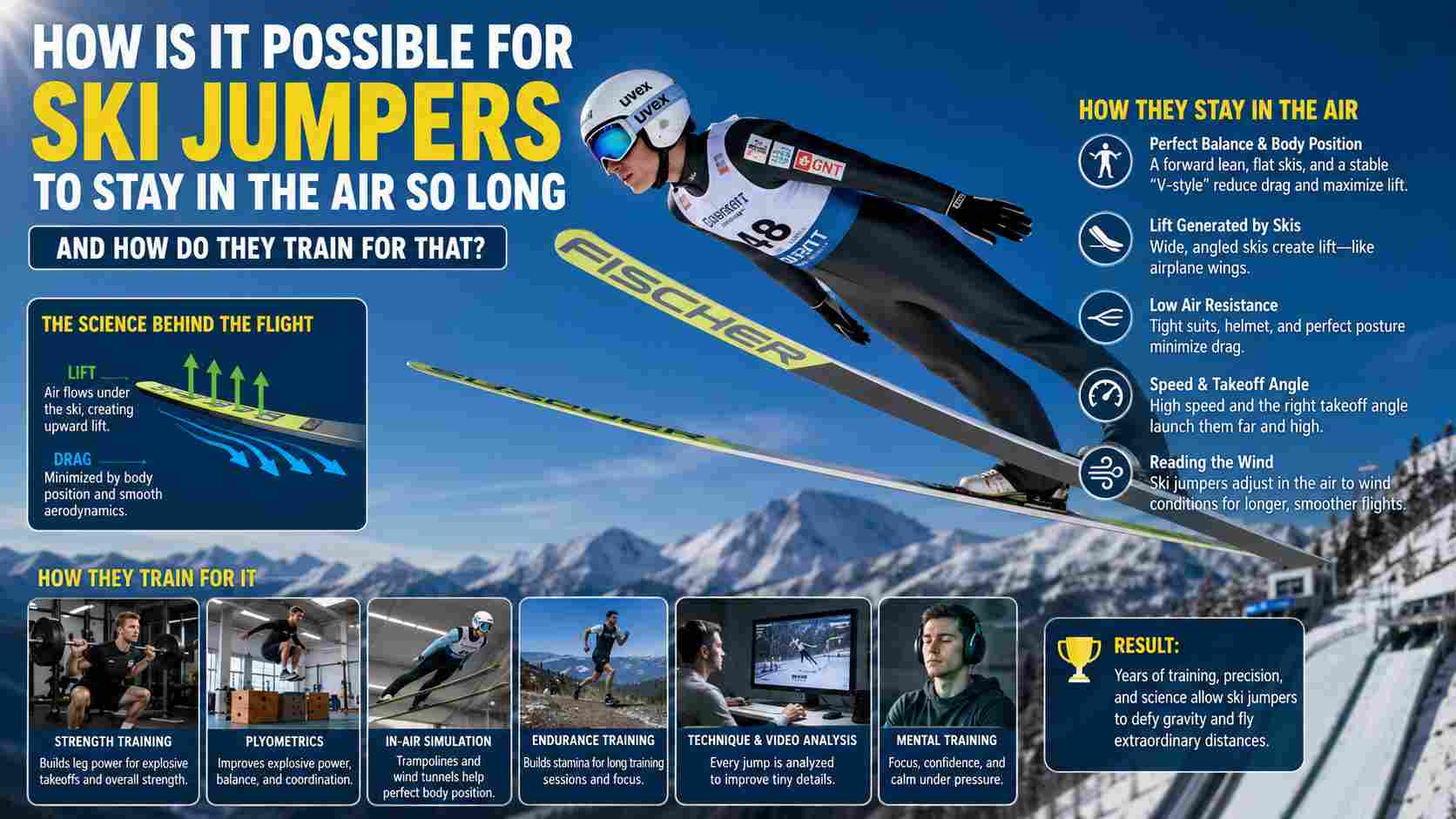
Have you ever watched a ski jumping competition and wondered, How Is It Possible For Ski Jumpers To Stay In The Air So Long And How Do They Train For That? When athletes launch from a steep ramp, they seem to float through the sky before landing smoothly on the snow. It almost looks like they are flying like birds. This amazing sight makes many people curious about the science and skill behind ski jumping.
The truth is that ski jumpers do not actually fly. They glide through the air by using speed, body position, special equipment, and the natural forces of physics. Every jump depends on careful planning, years of practice, and excellent physical fitness. Even a small mistake in body movement can reduce the distance of a jump.
Professional ski jumpers spend many years learning the right techniques. They also follow strict training programs to improve strength, balance, flexibility, and confidence. Modern equipment and careful weather checks also help athletes perform safely.
In this guide, you will learn the science behind long ski jumps, how professional athletes stay in the air for several seconds, and the training methods that help them reach world-class performance.
What Is Ski Jumping?
Ski jumping is a winter sport where athletes ski down a steep ramp, take off into the air, and land as far down the hill as possible. The goal is not only to jump a long distance but also to perform the jump with excellent style and control. Judges score each jump based on both distance and technique, making ski jumping a sport that combines athletic power with precision.
Unlike regular downhill skiing, ski jumping focuses on one powerful jump instead of racing to the finish line. Athletes build speed as they move down the inrun, push off at the edge of the ramp, and then glide through the air before making a controlled landing. Every stage of the jump requires perfect timing.
Ski jumping is also one of the most exciting events in the Winter Olympics. Athletes compete on different hill sizes, including normal hills and large hills. The best jumpers can travel more than 200 meters on ski flying hills, showing incredible control during long flights.
Success in ski jumping depends on much more than courage. Athletes need excellent balance, strong muscles, quick reactions, and a deep understanding of technique. Coaches spend years helping jumpers improve every movement, from the takeoff to the landing. Because both distance and style matter, even a very long jump may not win if the landing or body position is poor.This unique mix of science, skill, and athletic ability makes ski jumping one of the most fascinating sports in the world.
Why Do Ski Jumpers Stay in the Air for So Long?
Many people believe ski jumpers stay in the air because they jump very high. In reality, they stay airborne because several forces work together during the jump. Speed, lift, aerodynamics, momentum, and proper technique all help athletes glide through the air for several seconds.
The jump begins with high speed. As athletes race down the ramp, they build enough momentum to carry them forward after takeoff. Instead of moving straight upward, they travel forward while gradually descending. This creates the appearance of flying.
Another important factor is lift. When air flows around the jumper’s body and skis, it creates an upward force that helps slow the fall. The famous V-style position increases this lift by allowing more air to flow beneath the skis. Although gravity constantly pulls the athlete downward, lift reduces how quickly they lose height.
Aerodynamics also plays a major role. Ski jumpers carefully position their bodies to reduce drag while creating as much lift as possible. They lean forward, keep their bodies streamlined, and make tiny adjustments during the flight. Even a small change in head or arm position can affect the distance.
Years of training allow athletes to combine these factors perfectly. They learn the ideal takeoff angle, body posture, and landing technique. Instead of simply jumping into the air, professional ski jumpers perform a carefully controlled glide that follows the laws of physics.The science behind this incredible performance becomes even more interesting when we look at the forces acting on the jumper throughout the flight.
The Science Behind Staying Airborne
The answer to How Is It Possible For Ski Jumpers To Stay In The Air So Long And How Do They Train For That? lies in basic physics. Several natural forces act on the athlete from the moment they leave the ramp until they land. Understanding these forces explains why ski jumpers appear to fly through the air.
Gravity is always pulling the jumper toward the ground. It is impossible to escape this force, but athletes can reduce its effect by creating lift. Lift is produced when air moves around the skier’s body and skis. The V-shaped ski position increases the surface area facing the airflow, helping to generate more upward force.
Air resistance, also called drag, is another important factor. Too much drag slows the athlete and reduces jump distance. That is why ski jumpers wear specially designed suits and keep their bodies in a smooth, streamlined position. Their helmets, skis, and clothing are carefully regulated to improve performance while remaining fair for all competitors.
Forward momentum is equally important. The high speed gained before takeoff keeps the jumper moving through the air. Rather than dropping straight down, the athlete continues traveling forward while gradually losing height. This creates a long, smooth glide instead of a short jump.
The balance between gravity, lift, drag, and momentum determines how far a skier can travel. Coaches and sports scientists carefully study these forces to help athletes improve their technique. Every movement during flight is designed to create the perfect balance between stability and maximum lift.Although ski jumpers appear to fly, they are actually gliding. Their success comes from understanding physics and using it to their advantage through years of careful practice and training.
How Speed Helps Ski Jumpers Stay in the Air?
Speed is one of the most important reasons ski jumpers can remain in the air for several seconds. Before takeoff, athletes race down the steep inrun to build as much controlled speed as possible. Professional ski jumpers often reach speeds of around 85 to 95 kilometers per hour, depending on the size of the hill and weather conditions.
As the skier moves downhill, gravity helps increase speed. This movement stores energy that is released during takeoff. A smooth and powerful launch changes this speed into forward momentum, allowing the athlete to glide across a long distance instead of dropping quickly.
Higher speed also increases lift. As more air flows around the skis and body, it creates stronger aerodynamic forces. This additional lift helps slow the rate of descent, making the athlete stay airborne longer. However, speed alone is not enough. If the jumper takes off at the wrong angle or has poor body position, much of this advantage is lost.
A clean takeoff is just as important as the speed itself. Athletes push off the edge of the ramp with explosive power while keeping perfect balance. The timing must be exact. Jumping too early or too late can reduce both distance and stability.
Coaches spend countless hours helping athletes improve their approach speed and takeoff technique because these few seconds often decide the outcome of a competition. When speed, timing, and body position work together, ski jumpers can achieve the long, graceful flights that make this sport so exciting.
How Body Position Creates Lift?
Body position is one of the biggest reasons ski jumpers can stay in the air for such a long time. Even though athletes leave the ramp at high speed, they must quickly move into the correct flying position. This position helps create more lift while reducing air resistance. Every small movement matters because it can change how the air flows around the body.
The most important technique is the famous V-style. After takeoff, the skier spreads the front of the skis into a V shape while keeping the back ends closer together. This allows more air to pass under the skis, creating extra lift. The athlete also leans the upper body forward until it is almost parallel with the skis. This streamlined position helps the jumper glide smoothly through the air.
The arms are usually held close to the body instead of being stretched out. This reduces unnecessary drag and keeps the jumper balanced. The hips stay steady, and the weight is evenly distributed over both skis. Good balance is essential because even a slight shift in weight can change the direction of the flight.
Professional ski jumpers practice this body position thousands of times. Coaches often use video analysis to help athletes improve every detail. A small change in head position, shoulder angle, or leg movement can make the difference between an average jump and a winning one.
Body control also helps prepare for the landing. As the athlete approaches the ground, they carefully adjust their posture to land safely while earning high style points. This perfect combination of lift, balance, and timing allows ski jumpers to glide through the air with impressive control.
Why the V-Style Changed Ski Jumping Forever
The V-style is considered one of the greatest innovations in ski jumping history. Before it became popular, athletes kept their skis parallel during flight. While this method worked, it created less lift and limited how far jumpers could travel.
The V-style became widely known in the late 1980s when athletes discovered that spreading the skis into a V shape increased aerodynamic efficiency. At first, some judges did not like the new technique because it looked unusual. However, the improved jump distances soon proved its value, and it eventually became the standard style used around the world.
Today, nearly every professional ski jumper uses the V-style because it offers several important advantages. It creates more lift by allowing air to flow under the skis. This helps the athlete stay in the air longer and travel farther before landing. The position also improves stability during flight, making it easier to control direction and maintain balance.
The V-style works best when combined with the correct body posture. Jumpers keep their chest low, hips steady, and eyes focused forward. These details help reduce drag while making the most of the lift created by the skis.
Modern coaching programs teach the V-style from the beginning because it has become the foundation of successful ski jumping. Without this technique, athletes would struggle to achieve the impressive distances seen in today’s international competitions. It is a perfect example of how better understanding of aerodynamics has changed the sport for the better.
How Ski Jump Equipment Helps Athletes Stay Airborne
Skill is essential in ski jumping, but the right equipment also plays an important role. Every piece of gear is carefully designed to improve performance while following strict competition rules. Even small changes in equipment can affect how long a jumper stays in the air.
The skis are much longer and wider than regular downhill skis. Their shape helps create lift as air passes underneath them during flight. However, ski length is regulated based on the athlete’s height and body weight to ensure fair competition.
The ski suit is another important part of the equipment. It is made from special materials that help manage airflow without creating an unfair advantage. Competition officials carefully measure every suit before events because even small differences in thickness or fit can affect performance.
Helmets protect athletes from injury while being lightweight and aerodynamic. Modern helmets reduce air resistance and improve safety without limiting visibility. Ski boots provide strong ankle support while allowing athletes to maintain the correct flying position. Special bindings securely connect the boots to the skis and help maintain stability during takeoff, flight, and landing.
Every item is tested and approved under international competition rules. Athletes and equipment technicians work together to ensure that all gear performs at its best. This combination of advanced design and strict regulations helps create exciting competitions where success depends on skill rather than equipment alone.
Does Wind Help Ski Jumpers Stay in the Air?
Wind can have a huge effect on ski jumping. While athletes cannot control the weather, they must understand how different wind conditions influence every jump. Even a gentle breeze can change the distance and stability of a flight.
A headwind is usually helpful because it increases the airflow over the skis. This creates more lift, allowing the jumper to stay in the air longer. Many of the longest jumps happen when athletes benefit from a safe and steady headwind.
A tailwind has the opposite effect. It reduces the amount of air flowing under the skis, creating less lift and making it harder to achieve long distances. Strong tailwinds can shorten jumps significantly.
Side winds are often the most challenging. They can push athletes off balance during flight, making control more difficult. Ski jumpers must quickly adjust their body position to remain stable until landing.
Modern competitions use wind compensation systems to improve fairness. Officials measure wind speed at different points around the hill and adjust scores based on how much the wind helped or affected each athlete. This system reduces the advantage or disadvantage caused by changing weather conditions.
Safety is always the top priority. If winds become too strong or unpredictable, competitions may be delayed or stopped until conditions improve. Weather experts, judges, and event organizers carefully monitor every jump to ensure athletes compete under safe conditions.
Physical Training for Ski Jumpers
Physical fitness forms the foundation of every successful ski jumper. Without strong muscles and excellent body control, even the best technique cannot produce long, stable flights. Training programs are carefully designed to improve strength, power, balance, endurance, and flexibility while keeping athletes light enough to perform efficiently.
Leg strength is especially important because the takeoff lasts only a fraction of a second. Athletes must produce explosive power to leave the ramp with the correct angle and speed. Core muscles help keep the body stable during flight, allowing jumpers to hold the ideal aerodynamic position without unnecessary movement.
Upper body strength also plays a role by improving posture and overall balance. Although ski jumping is often seen as a leg-focused sport, the shoulders, back, and arms help maintain stability throughout the jump.
Endurance training allows athletes to recover quickly between practice sessions and competitions. Flexibility exercises improve movement around the hips, knees, and ankles while lowering the risk of injury. Mobility is especially important because jumpers spend much of the flight in a deep forward-leaning position.
Professional ski jumpers train almost every day throughout the year. Their workouts change with the season, focusing on building strength during the off-season and improving technique as competitions approach. This balanced approach helps athletes stay healthy while continuing to improve their performance year after year.
Plyometric Training
Plyometric training is one of the most important parts of a ski jumper’s workout routine. These exercises are designed to build explosive power, which is essential for a fast and effective takeoff. Since athletes have only a brief moment to push off the ramp, they need muscles that can produce maximum force in the shortest possible time.
Box jumps are a common exercise because they improve jumping height and leg power. Squat jumps strengthen the thighs and hips while teaching athletes to generate force quickly. Bounding drills develop coordination and help improve balance during movement.
Single-leg jumps are also widely used because they strengthen each leg individually. This helps correct muscle imbalances and improves stability during takeoff and landing. Coaches often combine these exercises with reaction drills to improve quick decision-making and body control.
Plyometric workouts are carefully planned to avoid overtraining. Athletes perform each movement with proper technique rather than simply completing as many repetitions as possible. Quality is more important than quantity because correct movement patterns lead to better performance on the ski jump.
By combining explosive exercises with technical practice, ski jumpers develop the power needed to launch smoothly into the air while maintaining perfect balance. This training plays a major role in helping athletes achieve the long, graceful flights seen in world-class competitions.
Strength Training
Strength training is a key part of every ski jumper’s routine. While athletes need to stay light for better flight, they also need enough muscle to produce a powerful takeoff and remain stable during the jump. The goal is to build functional strength without adding unnecessary body weight.
Squats are one of the most important exercises because they strengthen the legs, hips, and lower back. These muscles create the explosive force needed at takeoff. Deadlifts improve overall body strength and help athletes maintain balance during flight. Lunges are also valuable because they strengthen each leg separately, improving stability and coordination.
Core training is just as important as leg training. Exercises like planks, hanging leg raises, and medicine ball rotations strengthen the abdominal and lower back muscles. A strong core helps athletes hold the correct flying position while resisting unwanted movement caused by wind.
Many professional ski jumpers also include Olympic lifts, such as cleans and snatches, in their workouts. These exercises improve speed, coordination, and explosive power. However, they must be performed with proper technique under expert supervision.
The best strength programs focus on quality instead of lifting the heaviest weights. Coaches carefully monitor every athlete to maintain the right balance between muscle strength, flexibility, and body weight. This balanced approach helps ski jumpers become stronger while staying fast and agile.
Balance and Coordination Training
Balance is one of the most important skills in ski jumping. During a jump, athletes travel at high speed while making tiny body adjustments in the air. Even a small loss of balance can reduce jump distance or affect the landing. That is why balance and coordination training are included in every professional training plan.
Many athletes use balance boards to improve stability. Standing or performing simple movements on these boards strengthens the small muscles around the ankles, knees, and hips. These muscles help control body position during takeoff and flight.
One-leg exercises are also common. Standing on one foot, jumping on one leg, or catching a ball while balancing improves coordination and body awareness. Coaches often add reaction drills where athletes respond quickly to visual or sound signals. These exercises improve focus and help jumpers make fast adjustments during competitions.
Gymnastics and agility drills also play an important role. They teach athletes how to control their movements while changing direction smoothly. Better coordination allows ski jumpers to move naturally from takeoff to landing without losing balance.
Training balance every week gives athletes greater confidence. It also reduces the risk of falls and injuries because the body reacts more quickly to unexpected changes. Strong balance skills are often what separate experienced professionals from beginners.
Flexibility and Mobility Training
Flexibility may not seem as exciting as jumping or strength training, but it is essential for success in ski jumping. Flexible muscles and mobile joints allow athletes to move freely, maintain proper body position, and lower the risk of injury.
Stretching is part of every training session. Athletes usually perform dynamic stretches before exercise to prepare the muscles for movement. After training, static stretching helps improve flexibility and supports recovery.
Hip mobility is especially important because ski jumpers lean far forward during flight. Tight hips can make it difficult to achieve the ideal aerodynamic position. Flexible hamstrings also help athletes keep their legs stable while reducing stress on the lower back.
Shoulder mobility improves upper body posture during flight. Even though the arms stay close to the body, relaxed shoulders help athletes maintain balance and reduce unnecessary tension.
Mobility exercises also protect the knees and ankles, which experience heavy forces during takeoff and landing. Foam rolling, mobility drills, and light yoga sessions are commonly included in training programs to improve joint movement.
Athletes who stay flexible often recover faster and perform more consistently throughout the season. Good mobility allows them to repeat the correct technique without discomfort, helping them make small improvements over many years of training.
Aerodynamic Practice
Ski jumping is not only about strength. It is also about learning how to move through the air as efficiently as possible. Aerodynamic practice teaches athletes how to reduce drag and create more lift by improving their body position.
Many national teams use wind tunnels for training. Inside these facilities, athletes can test different flying positions while air flows around their bodies. Coaches observe how small adjustments affect lift and stability without needing to perform actual jumps.
Computer technology also plays an important role. Motion sensors and video analysis allow coaches to study body angles in great detail. They can compare successful jumps with weaker performances and identify areas that need improvement.
Athletes practice keeping their heads low, backs flat, and skis at the correct angle. These fine adjustments may seem small, but they can increase jump distance by several meters. Learning to stay relaxed during flight is another important goal because unnecessary tension creates extra drag.
Aerodynamic training continues throughout an athlete’s career. Even experienced professionals work on improving their flying position because modern competition is extremely close. Tiny improvements often make the difference between winning a medal and finishing outside the top ten.
Jump Simulation Training
Professional ski jumpers do not wait for winter to practice. They train throughout the year using jump simulation methods that allow them to improve technique in every season.
Many countries have plastic-covered ski jumps that can be used during summer. Athletes wear the same equipment as they do in winter, while water sprayed on the surface helps the skis slide smoothly. This allows them to practice real jumps without snow.
Foam landing areas are another useful training tool. Beginners can safely learn takeoffs and body position without worrying about hard landings. Coaches often repeat the same drill many times so athletes can build confidence and improve muscle memory.
Indoor training centers also use jump simulators that copy the movement of a real ski jump. These systems help athletes practice takeoff timing, body position, and balance in a controlled environment.
Repeating these movements again and again helps make the correct technique automatic. When competition day arrives, athletes no longer need to think about every movement because their bodies respond naturally through years of practice.
Mental Training for Ski Jumpers
Mental strength is just as important as physical ability in ski jumping. Standing at the top of a large hill requires courage, focus, and confidence. Even the strongest athlete may struggle without the right mindset.
Visualization is one of the most common mental training methods. Before jumping, athletes close their eyes and imagine every stage of the jump. They picture the takeoff, the flight, and the landing in great detail. This helps build confidence and prepares the mind for success.
Concentration exercises also improve performance. Ski jumpers learn to block out distractions, including crowds, weather conditions, and competition pressure. Breathing techniques help athletes stay calm before leaving the start gate.
Fear management is another important part of training. Since ski jumping involves high speeds and long flights, athletes gradually build confidence through regular practice. Coaches encourage positive thinking and help athletes overcome mistakes without losing motivation.
A strong competition mindset allows jumpers to perform consistently under pressure. Those who remain calm and focused often achieve better results than athletes who allow nervousness to affect their performance.
Video Analysis and Performance Review
Modern ski jumping relies heavily on video analysis. Every jump is recorded so athletes and coaches can study the performance in detail. Watching slow-motion footage helps identify small mistakes that are impossible to notice during the jump.
Coaches examine takeoff timing, body position, ski angles, and landing technique. They compare successful jumps with weaker ones to understand what caused the difference. Even a slight change in posture can affect flight distance and style scores.
Athletes also learn by watching world-class competitors. Studying the techniques of top performers helps them understand what excellent form looks like and how they can improve their own performance.Computer software provides additional information, including body angles and movement speed. This data allows coaches to make training more precise and effective.
Regular performance reviews help athletes improve step by step. Instead of making large changes, they focus on correcting one small detail at a time. Over months and years, these small improvements lead to significant progress.
Nutrition for Ski Jumpers
Good nutrition helps ski jumpers perform at their best while maintaining a healthy body weight. Since body weight affects flight performance, athletes must eat carefully without reducing energy levels.
Protein is important for building and repairing muscles after training. Lean meat, fish, eggs, dairy products, beans, and lentils are common choices. Carbohydrates provide energy for long practice sessions and competitions. Whole grains, fruits, vegetables, and potatoes are often included in daily meals.
Healthy fats also play an important role. Foods such as nuts, seeds, avocados, and olive oil support overall health and recovery. Hydration is equally important because even mild dehydration can reduce concentration and physical performance.
After training, athletes eat balanced recovery meals containing both protein and carbohydrates. This helps muscles recover faster and prepares the body for the next workout.
Professional ski jumpers usually work with sports nutrition experts who create meal plans based on individual needs. Healthy eating supports both performance and long-term health.
Recovery After Training
Recovery is just as important as training itself. Without enough rest, muscles cannot repair properly, and performance may decline. Professional ski jumpers include recovery sessions in every training schedule.
Sleep is the most effective recovery tool. Most athletes aim for at least eight hours of quality sleep each night to support muscle repair and mental recovery.
Stretching after exercise reduces muscle tightness and improves flexibility. Many athletes also receive sports massages to increase blood flow and reduce soreness after intense workouts.
Ice baths are sometimes used after difficult training sessions to reduce inflammation and speed recovery. Light activities such as walking, cycling, or swimming improve circulation without placing extra stress on the body.
Rest days are also necessary. Taking planned breaks allows both the body and mind to recover fully before returning to training. Athletes who recover properly are less likely to suffer injuries and more likely to perform consistently throughout the season.
How Long Does It Take to Become a Professional Ski Jumper?
Becoming a professional ski jumper takes years of hard work, patience, and regular practice. Most athletes begin learning the sport when they are between six and ten years old. Starting young helps them develop balance, confidence, and proper technique before moving on to larger ski jumps.
As young athletes improve, they compete in local and junior events. These competitions teach them how to perform under pressure and gain valuable experience. Coaches focus on building strong fundamentals instead of simply trying to achieve long jumps.
During their teenage years, talented jumpers may join regional or national development teams. At this stage, training becomes more serious and includes strength workouts, technical practice, nutrition planning, and mental coaching. Athletes also travel to national and international competitions to test their skills against stronger opponents.
Reaching the professional level usually takes 10 to 15 years of consistent training. Even after becoming professionals, ski jumpers continue learning throughout their careers. They work closely with coaches, sports scientists, and equipment specialists to improve every part of their performance.
Success in ski jumping is not only about talent. Dedication, discipline, and a willingness to keep improving every day are equally important. Those who stay committed over many years have the best chance of competing at the highest level.
Common Mistakes Beginners Make
Every beginner makes mistakes while learning ski jumping, but understanding these errors helps athletes improve more quickly. Most problems come from poor technique rather than a lack of courage.
One common mistake is poor body position during flight. Some beginners sit too upright instead of leaning forward. This creates more air resistance and reduces lift, making the jump shorter.
Another mistake is a weak takeoff. Jumping too early or too late changes the flight angle and affects both distance and balance. Timing is one of the hardest skills to master, which is why coaches spend so much time practicing takeoffs.
Many beginners also look down during the jump. This changes head position and can affect the entire body’s balance. Experienced athletes keep their eyes focused ahead to maintain a smooth flying posture. Lack of balance is another challenge. Without strong core muscles and good coordination, athletes struggle to stay stable in the air. Insufficient strength can also reduce takeoff power, making it difficult to achieve longer jumps. The good news is that these mistakes improve with regular coaching and practice. By focusing on proper technique from the beginning, athletes build good habits that support long-term success.
Is Ski Jumping Dangerous?
Like many winter sports, ski jumping carries some risks. Athletes travel at high speed and perform long jumps, so safety is always a top priority. However, modern equipment, strict rules, and professional coaching have made the sport much safer than in the past.
The most common injuries involve the knees, ankles, shoulders, and wrists. Falls can happen if weather conditions change suddenly or if an athlete loses balance during landing. That is why competitions are carefully managed by trained officials. Modern ski jumping hills are designed to reduce risk. Their shapes are based on detailed engineering studies that create safer takeoff and landing areas. Competition organizers also monitor wind conditions before every jump. If the weather becomes unsafe, the event is delayed or stopped.
Athletes wear protective helmets and use carefully tested equipment that meets international safety standards. Coaches teach proper landing techniques to reduce stress on the body and lower the chance of injury. Medical teams are always present during major competitions, ready to respond if an accident occurs. Thanks to continuous improvements in equipment, coaching, and safety procedures, professional ski jumping is much safer today than it was decades ago.
Interesting Facts About Ski Jumpers
Ski jumping is full of amazing facts that surprise many sports fans. One interesting fact is that athletes can stay in the air for several seconds, depending on the size of the hill and the distance of the jump. Professional ski jumpers often reach speeds between 85 and 95 kilometers per hour before takeoff. On ski flying hills, where the ramps are much larger, jump distances can exceed 200 meters under ideal conditions. The longest ski jumps in history have traveled well over 250 meters, showing how much the sport has developed through better technique and equipment. Even with these incredible distances, athletes still rely on precise body control throughout the flight.
Another interesting fact is that style matters almost as much as distance. Judges award points for smooth takeoffs, stable flight positions, and graceful landings. A longer jump does not always guarantee victory if the technique is poor. Many ski jumpers also train during summer using plastic-covered hills. This allows them to practice year-round instead of waiting for winter. Continuous training helps athletes maintain their skills and improve their performance every season.
Myths About Ski Jumping
There are many myths about ski jumping, and some of them can make the sport seem more mysterious than it really is. One common myth is that ski jumpers actually fly. In reality, they glide through the air using lift created by speed, body position, and aerodynamics. Gravity is always pulling them downward. Another myth is that bigger skis automatically produce longer jumps. While ski size is important, technique, balance, timing, and weather conditions have a much greater effect on performance. Competition rules also limit ski length to keep events fair.
Some people believe wind alone decides who wins. Although wind affects every jump, modern competitions use wind compensation systems to reduce its influence. Skill remains the biggest factor in success. Many also think strength is the only requirement for ski jumping. In fact, balance, flexibility, coordination, confidence, and technical knowledge are equally important. Successful athletes train every part of their bodies and minds to perform at the highest level. Understanding these myths helps people appreciate how much science, training, and skill are involved in every jump.
Quick Summary Table
| Question | Short Answer |
| Why do ski jumpers stay in the air so long? | Lift, speed, aerodynamics and excellent technique work together. |
| How fast do they go? | Most professional ski jumpers reach about 85–95 km/h before takeoff. |
| What is the V-style? | A flying position that increases lift by spreading the skis into a V shape. |
| How do they train? | Through strength, plyometrics, balance, flexibility, technique, and mental practice. |
| Is ski jumping safe? | Yes, with modern equipment, strict rules, and proper coaching. |
Expert Tips for Understanding Ski Jumping
If you are new to ski jumping, watching competitions carefully can help you understand why the sport is so impressive. Instead of only looking at the jump distance, pay attention to each stage of the performance.
Watch how athletes leave the ramp. A smooth and powerful takeoff creates the foundation for a successful jump. Next, notice how they move into the V-style almost immediately after leaving the ramp.
Observe the body position during flight. The best ski jumpers keep their bodies low, balanced, and steady while making only tiny adjustments. These small movements help control lift and reduce drag.
As the athletes approach the landing area, notice how they prepare for touchdown. A controlled landing not only improves safety but also earns valuable style points from the judges.
Finally, pay attention to the weather conditions. Wind can change from one jumper to the next, making every competition different. Understanding these details makes watching ski jumping even more enjoyable.
Frequently Asked Questions
1. Why are ski jump skis much longer than regular skis?
Longer skis create more surface area, helping athletes generate greater lift while gliding through the air. Competition rules carefully control ski length to keep the sport fair.
2. Do ski jumpers train only during winter?
No. Professional ski jumpers train throughout the year. They use plastic-covered hills, indoor training centers, strength programs, and jump simulators to improve during every season.
3. Why do ski jumpers wear tight-fitting suits?
The suits are designed to manage airflow while following strict competition rules. They help athletes maintain a stable flying position without giving an unfair aerodynamic advantage.
4. Can the weather cancel a ski jumping competition?
Yes. Strong or unpredictable winds can make jumping unsafe. Officials closely monitor weather conditions and may delay or postpone events to protect athletes.
5. What is the most difficult skill to master in ski jumping?
Many coaches believe the takeoff is the hardest skill. Perfect timing, explosive power, and the correct body angle are all needed to achieve a long and controlled flight.
Conclusion
The answer to How Is It Possible For Ski Jumpers To Stay In The Air So Long And How Do They Train For That? is a combination of science, skill, and years of dedicated practice. Ski jumpers do not truly fly. Instead, they glide through the air by using speed, lift, aerodynamics, and perfect body position. Their success also depends on modern equipment, careful weather management, and advanced coaching techniques.Behind every impressive jump are thousands of hours of strength training, balance exercises, technical practice, mental preparation, and recovery. Every small improvement helps athletes jump farther while staying safe. The next time you watch a ski jumping event, you will better understand the incredible effort and knowledge behind every flight.
 anasshahzad